
The Permanent Solution to Temporary Inconsistency
“Why can’t I stay consistent?”
This is one of the biggest questions someone who’s on a track of self-improvement would ask.
And honestly? It’s not a bad question to have.
But in my experience as someone who has been doing self-improvement work for 15 years, it’s the wrong question to dwell on.
This article is going to help you stop lingering on this question so you can start being more consistent.
Why The Question “Why Can’t I Stay Consistent” Is Not Something to Dwell On

I want to reiterate: there is nothing wrong with asking this question. Questions lead to answers.
But once again, it is the wrong question to dwell on for several reasons:
1. It doesn’t create progress on its own
When you repeatedly ask this question, you may think you’re getting closer to an answer.
But in my experience asking questions like this, all it does is lead to overthinking and mental rumination.
This ends up making you circle around the drain. This leads to my next point.
2. It wastes time
This goes without saying since it doesn’t create progress and this is the wrong question to dwell on, it can be said that it is ultimately a waste of time.
It’s not productive, it doesn’t move things forward, and it is something you’d be better off not doing (duh).
3. It is ultimately an identity level question
If you were a consistent person in your specific activity, you wouldn’t be asking this question.
You would have the ability to do something every day for 10 years because that’s simply who you are.
There wouldn’t be any anxiety or any foreboding because being consistent is embedded into your nervous system.
The Right Question to Ask
There is a right question to ask however: what are you aiming at?
More clearly stated, what are you trying to be consistent at?
You can’t be consistent with everything. There’s only so many hours in the day. Therefore, you can only be consistent with the right things.
You need to pick one (or a couple of things at most) to say that you won’t miss on.
The Permanent Solution to Temporary Inconsistency
From my own personal experience of doing self-improvement work for over 15 years and trying hundreds of methods, here’s the only real things that have worked for me.
1. Choose your north star
These are also known as “goals”. Consistency only really works when you have a destination you’re striving towards.
To narrow it down, think: what is one goal that, if achieved, makes everything else easier or unnecessary?
I got this concept from The One Thing, and it changed how I think.
What is the highest leverage move in your life right now?
Some people may argue that you can be consistent without a goal but you’re better off having one in mind because it gives you something to strive/aim for.
2. Choose what you’ll give up
We all only have 24 hours in a day.
Some of us have more non-negotiables than others (like work, childcare, etc.) therefore, if we want to be consistent on something that’s important to us (physical fitness, artistic pursuits, etc.) then we will have to do less of something else.
This may mean watching less TV, going on the Internet less, partying less, etc.
The sacrifice of your free time is the raw material you use to build the life of your dreams.
3. Do the minimum effective dose if you need to
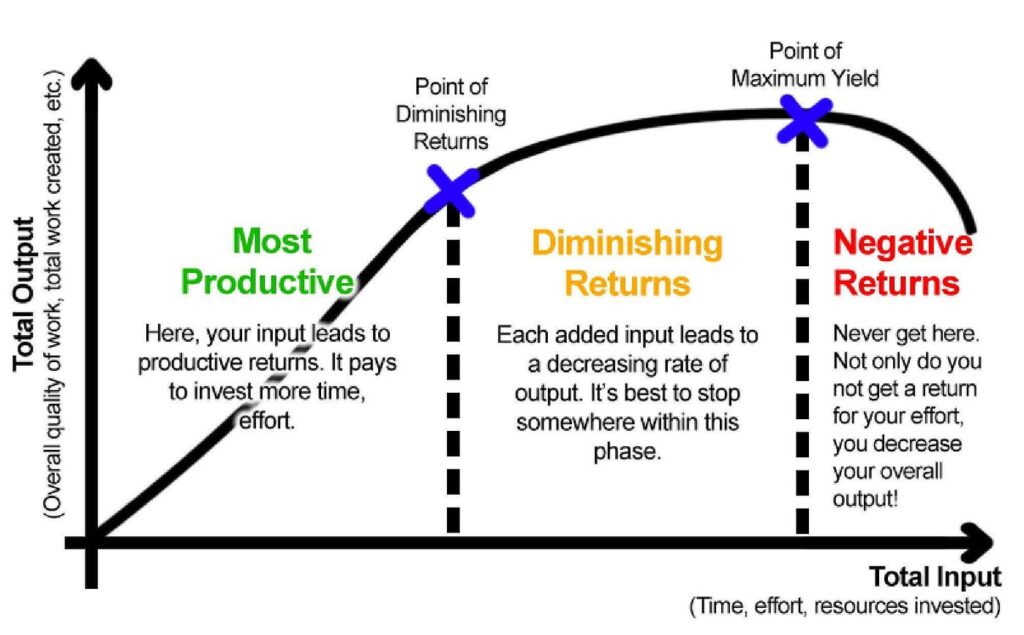
The minimum effective dose (MED) is defined simply: the smallest dose that will produce a desired outcome. – Tim Ferriss
In Tim Ferriss’ 4-Hour Body, he proposes an idea of minimum effective dose (MED). This is the smallest amount of a dose that will produce a desired outcome.
When it comes to consistency, the goal is to “not break the chain”. Meaning:
- If you can only play guitar for 10 minutes that day, play 10 minutes
- If you can only work out for 20 minutes that day, work out for 20 minutes
- If you can only write your book for 30 minutes that day, write for 30 minutes
The goal is not time on task, the goal is progression. And you use the minimum effective dose to get there.
4. Focus on progressing, not regressing
Most people unwittingly steal their own momentum. This is because again, they break the chain. Progress is only gained by working on something continuously until it’s achieved.
This goes in line with something I call “consolidating your gains”. This means, if you work up to a certain level and it takes more effort to progress than it did before, work at that level until it becomes your baseline. Then move up from there.
My personal example of this this is learning how to play guitar.
When I first started out, I didn’t sound like a guitar god. In fact, I sounded pretty bad. But I did learn the notes on the scale and where they were located. And then I learned some chords.
Once I learned those notes and those chords, I work at those until those become encoded into my muscle memory.
Then I moved onto learning songs. In this case, one song. Then I stayed with that song until I had it memorized. Then I repeated.
Now, I can take significant time away from guitar and still be able to play well because not only did I check the box for consistency, but I opened the door to long-term neural rewiring through neuroplasticity.
This is how you ultimately develop skills.
5. Have a long(er) time perspective
The main thing underpinning all of this is time.
Most importantly, knowing how time will affect things in the future.
If you don’t believe in your ability to be a better and stronger person in the future, then none of this will matter.
That’s why you need to have a long time perspective.
Conclusion + Wrapping Up
At its core, consistency (or lack thereof) is an identity-level issue.
Whether you are consistent or not shouldn’t really be something you dwell on because it doesn’t create progress and it wastes time you could be spending on getting in motion.
Use these steps to start your journey of consistency today.